
Every column, defined
A plain-language description for each table and column, written from what the asset actually does, not its cryptic legacy name.
 Contact
 The Chronicler writes a dictionary entry for every table and column as the platform is built: definitions, types, the tests that guard each field, and a link into the lineage. Searchable, in your catalog, and yours to keep.
Most estates have a working platform and no current dictionary. The Chronicler fixes that as it goes: it writes a structured entry for every model and column, drawn from what the asset really does, so a new analyst can read a table instead of reverse-engineering it.
# generated by the Chronicler
version: 2
models:
  - name: dim_customer
    description: "One row per customer, SCD Type 2."
    columns:
      - name: customer_key
        description: "Surrogate key, unique per version."
        tests: [unique, not_null]
      - name: customer_id
        description: "Business key from CRM."
        tests: [not_null]
      - name: valid_from
        description: "Row effective-from timestamp."
A dictionary is only useful if it answers the next question. Each entry carries enough to do that.
A plain-language description for each table and column, written from what the asset actually does, not its cryptic legacy name.
Data types, nullability and keys, captured so the contract of each table is explicit and checkable.
Who owns what, grouped by domain, so questions go to the right team instead of into a void.
Each entry links to the lineage graph and the tests on that column, so a definition, its origin and its guarantees sit together.
In dbt the dictionary is the dbt docs site, generated for free; in your own framework we write the same definitions into your catalog, which is extra effort on our side. dbt or your framework →
On the dbt flavor those YAML definitions render as a searchable catalog: an overview of every layer and source, and a page per model with its columns, tests and lineage.
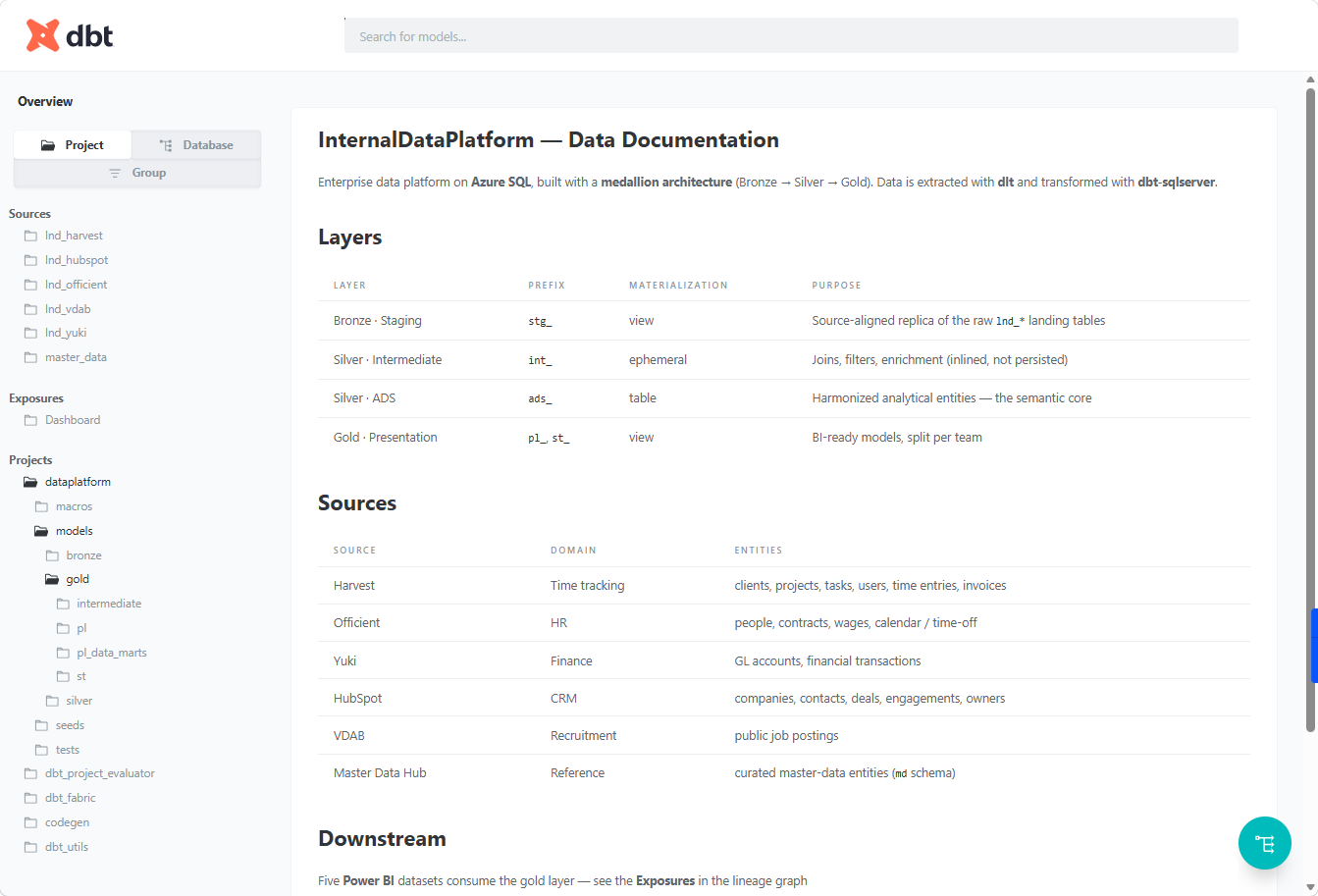
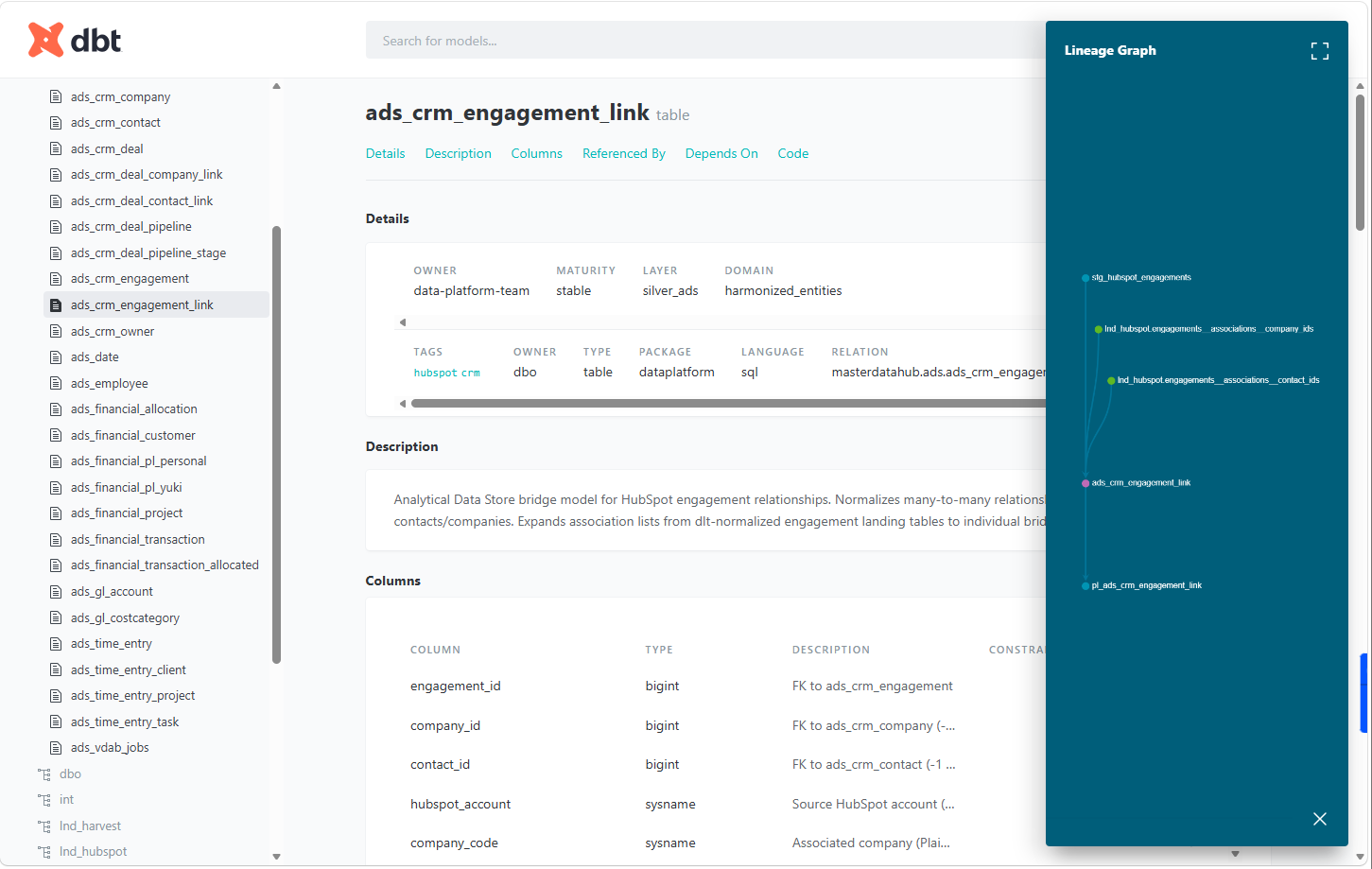
For every model: a plain description, and for every column its type, a description, the tests that guard it, and a link into the lineage. Enough that a new analyst understands a table without asking anyone.
Yes. It lives in your platform’s catalog and your repository, so it is searchable and diffable. On the dbt flavor it is the dbt docs site; in your own framework the Chronicler writes the same definitions into your catalog.
It is generated from the build, so it regenerates when a model changes. There is no separate wiki to update and forget. See everything you keep →
The knowledge base documents the legacy estate; this dictionary documents the new platform. The lineage links the two, so a column’s definition and its origin sit one click apart.
The estate assessment documents a representative slice of your estate, so you can see the dictionary you would keep, linked to its lineage, before you commit.
Plan my migrationA short form, no spam. We usually reply within one business day.